Introduction to Chinese Creation Myths
Chinese creation myths form a vital part of the rich tapestry of Chinese folklore and cultural identity. These legends, steeped in historical significance, convey the values and beliefs of ancient civilizations and offer insights into the natural world perceived by early Chinese societies. Unlike Western creation stories that may focus on a singular deity, Chinese myths often embrace a pantheon of gods, illustrating a diverse perspective that captures the complexities of existence.
Pangu: The Giant Who Created the Universe
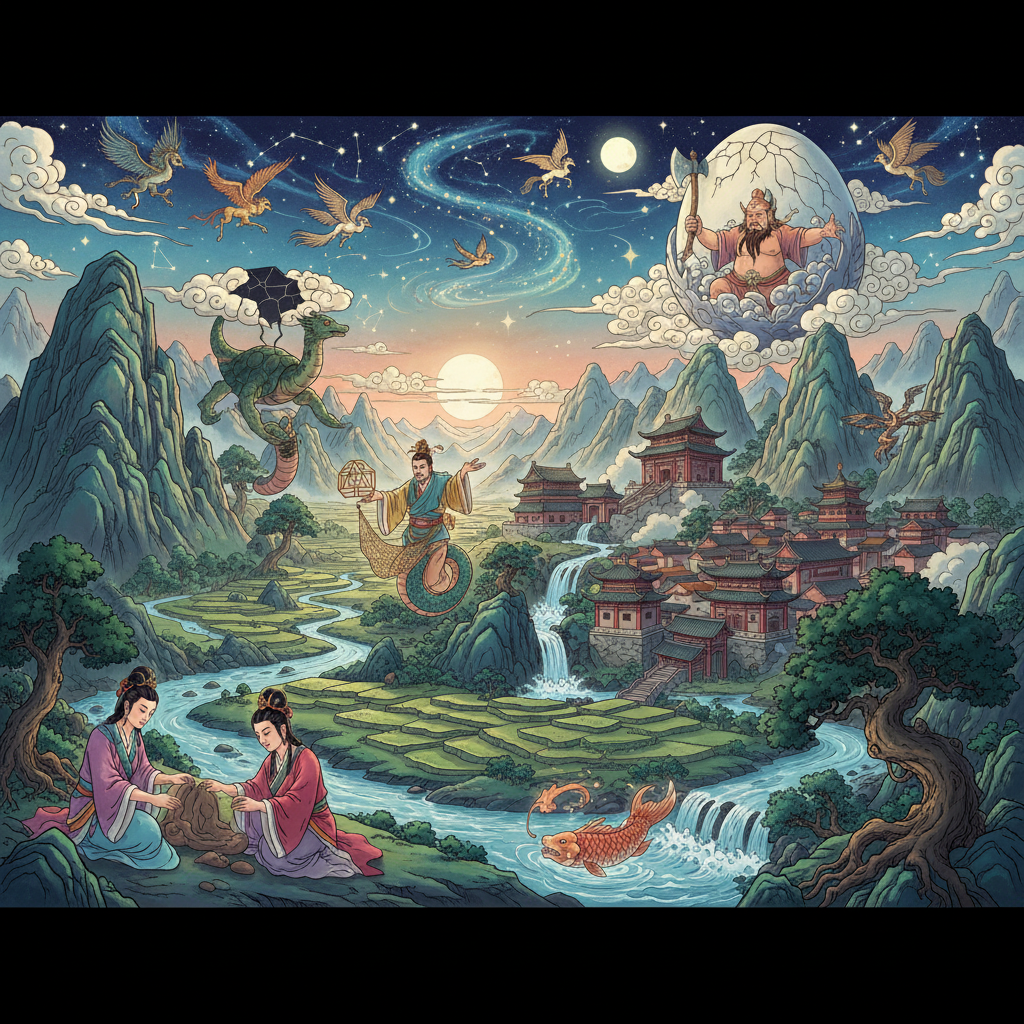
One of the most renowned figures in Chinese creation mythology is Pangu. According to the myth, at the beginning of the universe, chaos reigned in a vast void. Pangu, a colossal being, emerged from this primordial chaos. After laboring for 18,000 years to separate the heavens and the earth, he ultimately died, and his body became the world around us, giving rise to mountains, rivers, and flora.
Pangu's tale is significant for several reasons. Firstly, it symbolizes the struggle between order and chaos, a theme prevalent in various philosophies, including Daoism. Secondly, the myth illustrates the interconnectedness of nature, where even the death of a being contributes to life itself. Pangu's narrative not only serves as a creation story but also reflects the deep respect for nature inherent in Chinese culture.
Nuwa: The Goddess of Creation and Restoration
Nuwa, often depicted as a woman with a serpent's body, is another crucial figure in Chinese creation mythology. Various legends attribute the creation of humanity to her, showcasing the duality of life and the nurturing aspect of femininity. According to one story, after Pangu's creation of the world, Nuwa fashioned humans from yellow earth. In her quest to provide companionship for the lonely beings, she created different ranks of humans: the nobility from fine clay and the common people from less refined material.
Nuwa's narrative extends beyond creation, as she is also celebrated for her role in restoring the heavens after a catastrophic event destabilized the universe. In response to the world’s imbalance, she repaired the sky using colorful stones, embodying resilience and the necessity of balance—values central to Chinese philosophy and society.
Historical Context: Myths in Ancient Chinese Life
Creation myths in ancient China were not merely stories; they represented a framework for understanding the cosmos and humanity's place within it. These legends were often told alongside important cultural practices, shaping agricultural practices, social structures, and even governance. Emperors were sometimes viewed as descended from divine beings, reinforcing their authority through these myths.
Moreover, in varying dynastic periods, these legends were recorded and preserved, illustrating their importance across centuries. Texts such as the "Shan Hai Jing" (Classic of Mountains and Seas) served as compendiums of mythological tales, contributing to the philosophical underpinnings of Chinese culture.
Cultural Significance: Lessons Embedded in Myths
Chinese creation myths offer invaluable lessons on many levels. The themes of sacrifice, balance, and coexistence with nature resonate profoundly with societal values. These narratives foster a sense of unity, connecting generations by illustrating shared origins and ideals.
For contemporary society, these myths remain significant in cultural manifestations, be it through art, literature, or festivals. They inspire a multitude of creative expressions, from traditional opera to modern adaptations in film and literature, allowing people to reconnect with their heritage.
Conclusion: The Enduring Legacy of Chinese Creation Myths
The wealth of creation myths in Chinese folklore not only invites us to contemplate the origins of the universe but also unveils the cultural ethos that informs much of Chinese society today. Whether through the formidable tale of Pangu, the nurturing spirit of Nuwa, or various stories that embody resilience and harmony, these myths have shaped a national identity deeply intertwined with environmental respect, communal values, and philosophical musings.
As we explore these timeless legends, we gain insight into the heart and soul of a civilization that continues to thrive. From ancient Chinese society to the present, the importance of creation myths remains a cherished aspect of cultural heritage, deserving of admiration and study for generations to come.