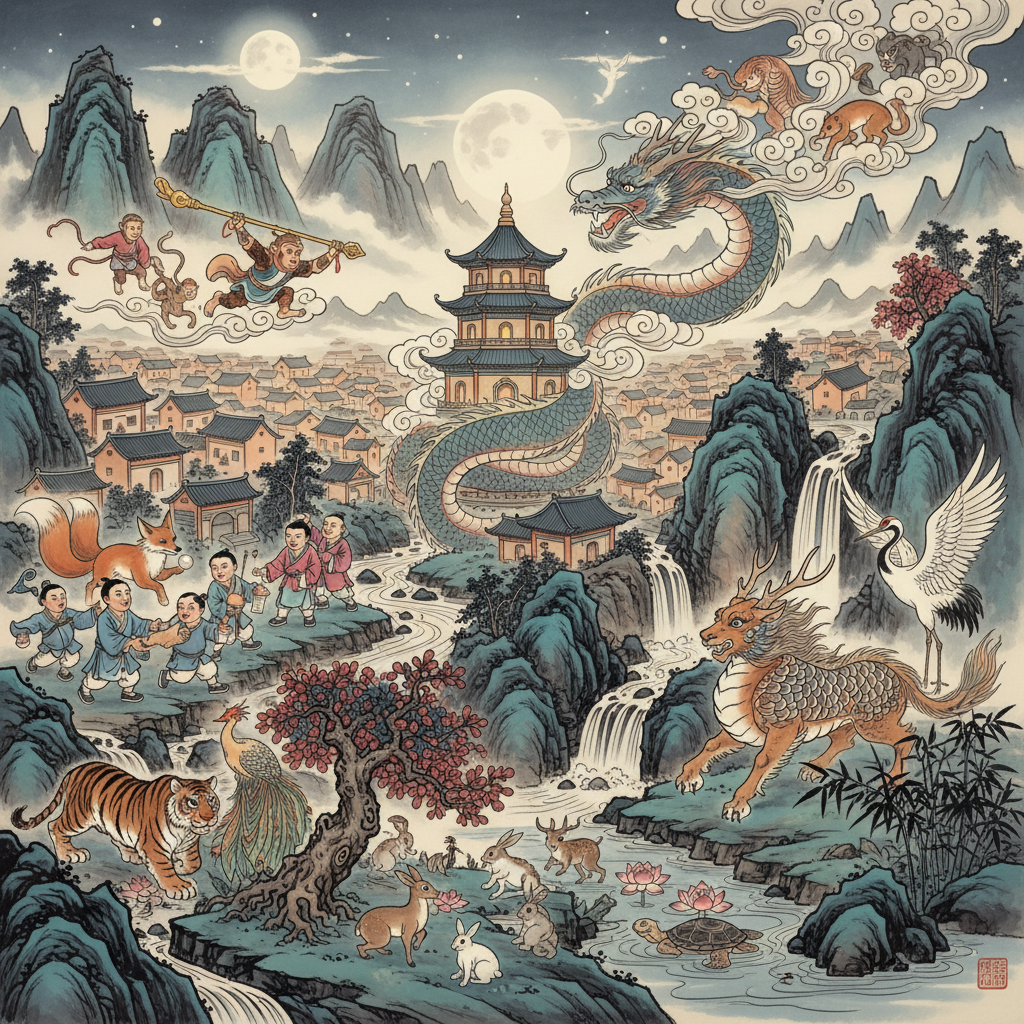
The Allure of Chinese Animal Tales
Chinese folklore is a treasure trove of myths, legends, and fairy tales, deeply rooted in the nation's history and cultural values. Among these enchanting narratives, animal tales hold a special place. These stories utilize anthropomorphized animals to convey moral lessons, cultural significance, and social critique. From clever foxes to wise tigers, the characters in these folktales engage audiences of all ages, teaching valuable lessons while offering a glimpse into the rich tapestry of Chinese cultural traditions.
Historical Context of Animal Folklore
The origins of animal tales in Chinese folklore can be traced back thousands of years. They often serve as didactic tools, reflecting philosophical ideas from Confucianism and Daoism. The famous collection of fables known as "Zhuangzi," attributed to the philosopher Zhuang Zhou, showcases animal characters that embody human traits and moral dilemmas. These stories have stood the test of time, evolving as they were passed down through generations, making them a prominent aspect of Chinese storytelling.
In ancient China, oral tradition played a significant role in preserving these tales before they were documented in written form. Scholars, peasants, and storytellers perpetuated the wisdom of these narratives, helping them to transcend societal boundaries and become integral to Chinese identity. As urbanization and modernization continue to change the fabric of Chinese society, animal tales remain a cherished aspect of cultural memory.
Moral Lessons through Animal Characters
The use of animals in Chinese folklore serves a dual purpose – entertaining audiences and conveying moral lessons. Take, for example, the well-known fable of "The Fox and the Grapes." This tale tells the story of a fox who, unable to reach some grapes, concludes that they are probably sour. This narrative embodies the concept of "sour grapes," teaching the reader about human nature and the psychological defense mechanism known as rationalization.
Another classic story is that of "The Tortoise and the Hare," which shares a similar theme of perseverance over arrogance. In this narrative, the slow and steady tortoise ultimately triumphs over the swift but overconfident hare. This specific moral resonates deeply in Chinese culture, emphasizing diligence and patience as critical virtues.
These stories often incorporate elements of humor and wit, allowing them to be relatable across different generations. The playful dynamics among animal characters serve not only as entertainment but as a reflection of human behavior, offering insights into societal issues such as greed, pride, and cunning.
Cultural Significance of Animal Symbols
Animals in Chinese culture symbolize various traits and qualities, and many animal tales reflect these associations. For instance, the dragon, a revered creature in Chinese mythology, epitomizes power, strength, and good fortune. While traditional tales often depict the dragon as a wise ruler of water, animal stories may portray it in a more relatable light, interacting with other creatures and humans in everyday scenarios.
Similarly, the tiger represents bravery and courage. The tale of "The Tiger's Visit" highlights the fierce nature of the tiger while intertwining themes of respect and fear among the animal kingdom. Such animal tales serve as both allegorical narratives and a means to instill traditional values among listeners, illustrating how intrinsic these symbols are to the cultural identity of the Chinese people.
Modern Adaptations and Global Influence
In contemporary China, animal tales continue to thrive and adapt to modern sensibilities. Animations, films, and literature reinterpret these classic stories, ensuring their relevance in today's fast-paced society. The Disney film adaptation of "The Monkey King" is an example of how traditional tales are reimagined for global audiences. Such adaptations not only celebrate Chinese folklore but also introduce it to international viewers, raising awareness and appreciation for the richness of this cultural heritage.
The ongoing interest in animal tales can also be observed in the rise of children's literature focused on these narratives. Authors often draw inspiration from traditional stories, creating new tales infused with modern morals while retaining their roots in folkloric traditions. This process of reinterpretation keeps the stories alive, ensuring their transmission to future generations.
Conclusion: A Cultural Legacy
Chinese animal tales represent more than mere stories; they embody the wisdom of a civilization that has thrived for millennia. By blending entertainment with moral teachings, these narratives have become an important medium for cultural preservation. The enduring themes and relatable characters foster connections between the past and present, allowing people across generations to engage with the rich legacy of Chinese folklore.
As global curiosity about Chinese culture continues to rise, these animal tales serve as both a mirror reflecting societal values and a bridge connecting diverse audiences through the universal language of storytelling.