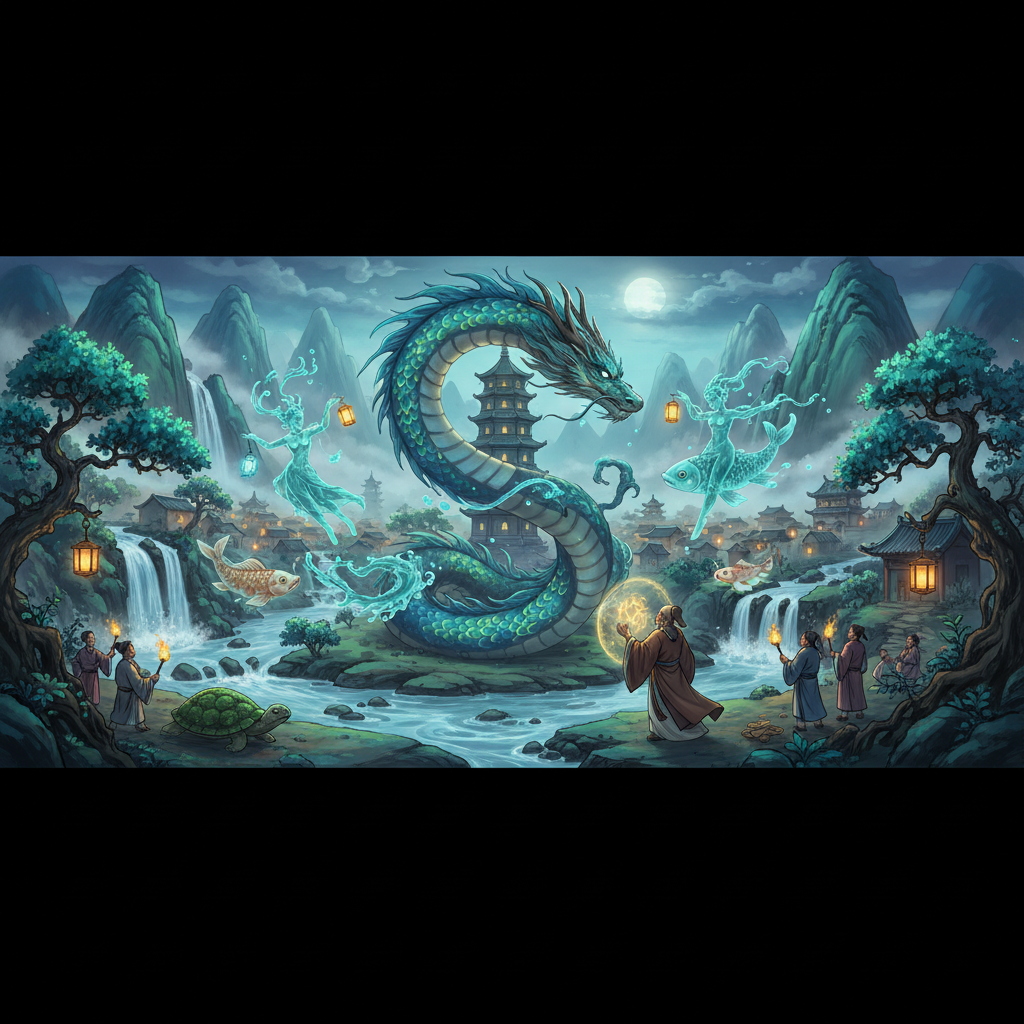
The Enchantment of Water in Chinese Folklore
Water has long been revered in Chinese culture, symbolizing life, dynamism, and transformation. The abundance of rivers, lakes, and seas across China's vast landscape has fostered numerous legends and folklore related to water. These narratives not only capture the imagination but also reflect deep-seated beliefs and values. Understanding these water legends provides insight into the historical context and cultural significance intertwined with the natural world that Chinese people have revered for centuries.
Dragons: Guardians of Water
One of the most prominent figures in Chinese water legends is the dragon, a powerful symbol often associated with water and weather. Unlike the fire-breathing dragons of Western folklore, Chinese dragons are benevolent, representing auspiciousness and strength. They are believed to control rainfall, rivers, and seas, making them essential to agriculture and, consequently, society's prosperity.
One well-known legend is the "Dragon King" myth, which narrates how the Dragon King of the East Sea governs all aquatic life and controls the weather. Desiring a bountiful harvest, villagers would pray to the Dragon King for rain, underscoring the intertwined relationship between humans and nature. These legends not only highlight humanity’s dependence on natural elements but also symbolize the hope and fear associated with climate and seasons.
The Legend of the White Snake
One of the most famous Chinese fairy tales involving water is "The Legend of the White Snake," a story filled with love, tragedy, and the struggle between good and evil. This ancient tale recounts the romance between a human named Xu Xian and a beautiful serpent spirit named Bai She, who transforms into a woman. Their love faces immense challenges, primarily from the Buddhist monk Fahai, who embodies law and morality, arguing that a human should not marry a supernatural being.
The story's backdrop—a setting of lush lakes and rivers—symbolizes the fluid nature of love and the complexities of social acceptance. "The Legend of the White Snake" is celebrated in various forms of Chinese performing arts, such as opera and dance, and remains a timeless exploration of themes related to love, identity, and societal norms.
The Jiangshi and the Water's Embrace
Another fascinating aspect of Chinese water legends involves the mythological creature known as the Jiangshi, or "hopping vampire." While not exclusively tied to water, some variations of the legend portray Jiangshi emerging from water after being cursed or wronged. This brings an eerie connection between water and the themes of death and rebirth present in many cultures.
The image of a simmering lake blanketed in fog often evokes these tales, where water acts as a harbinger of supernatural forces. The equilibrium between life and death in these stories underscores Chinese beliefs about the cyclical nature of existence, much like the ebb and flow of tides.
Cultural Traditions Surrounding Water Legends
Water legends in China can also be seen as reflections of the country's rich cultural tapestry. Various festivals, for example, incorporate elements of water legends. The Duanwu Festival, or Dragon Boat Festival, commemorates the poet Qu Yuan, who drowned himself in despair over his country's corruption. The festival features colorful dragon boat races, symbolizing the villagers' attempts to rescue him, further reinforcing the connection of water to cultural narratives.
Moreover, water-themed celebrations remind participants of the virtues of loyalty, sacrifice, and community. The importance of these stories cannot be overstated, as they serve to cultivate cultural identity and continuity through generations.
Conclusion: The Enduring Legacy of Water Legends
As we explore the depths of Chinese water legends, we uncover a world rich with cultural significance, moral lessons, and deep emotional resonance. These tales, from the revered Dragon Kings to the tragic romance of the White Snake, reflect the intricate relationship between humans and the natural world. As modernity continues to reshape China's landscape, these water legends remain vital in preserving cultural wisdom and fostering a sense of identity steeped in history.
In a society that reveres ancestral stories, the legacy of water legends paves the way for future generations to connect with their past while navigating the complexities of contemporary life. Understanding these narratives offers not only an appreciation of folklore but also insight into the values and aspirations that shape Chinese culture today.