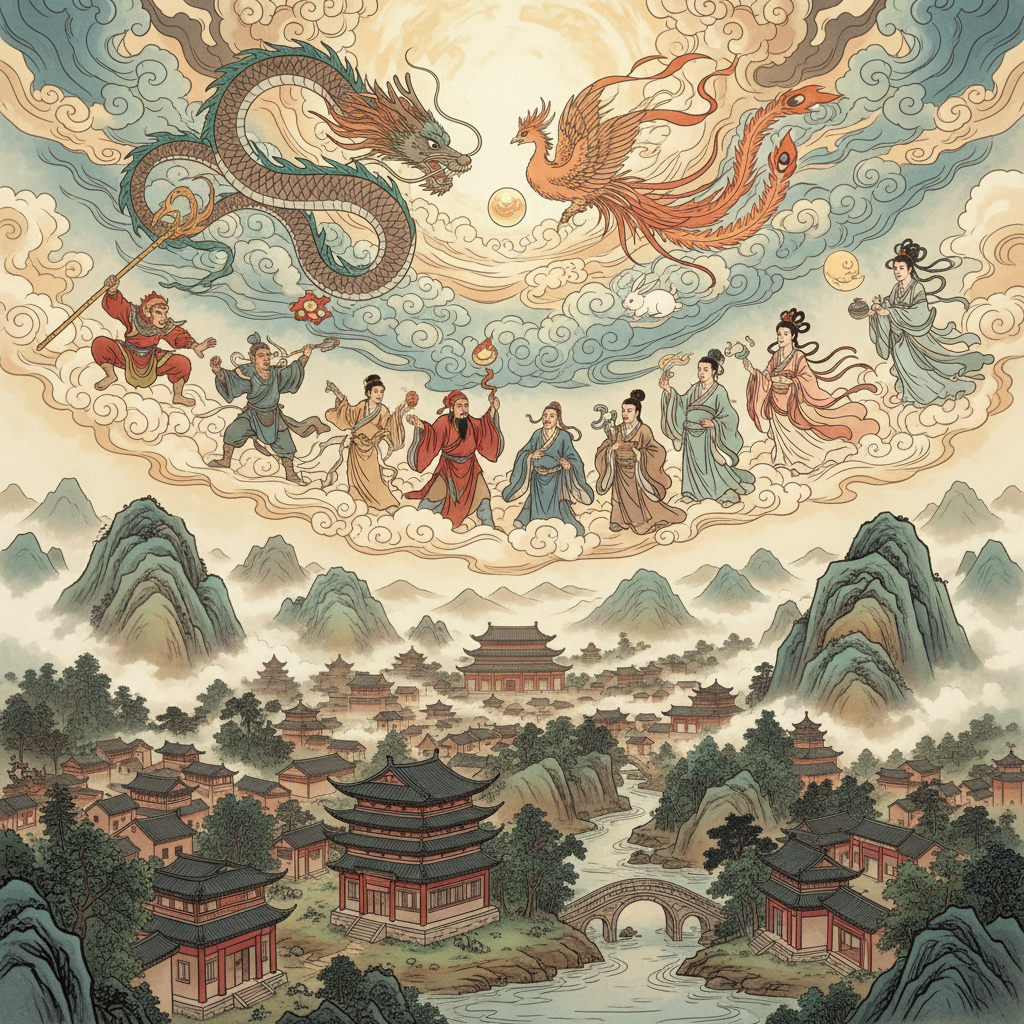
Introduction to Chinese Folklore and Legends
Chinese folklore is a treasure trove of legends, fairy tales, and cultural traditions that reflect the values, beliefs, and historical contexts of one of the world’s oldest civilizations. With thousands of years of history, these stories have been passed down through generations, enriching the tapestry of Chinese culture. By exploring Chinese folklore, we gain not only entertainment but also insight into the philosophical and moral underpinnings that have shaped the Chinese worldview.
Key Themes in Chinese Folklore
1. Harmony and Balance
One of the predominant themes in Chinese folklore is the concept of harmony and balance, conceptually rooted in Confucianism and Taoism. Many stories emphasise the importance of living in harmony with nature and other beings. For instance, in the tale of "The Butterfly Lovers," the love story between Liang Shanbo and Zhu Yingtai is not only a romantic narrative but also a representation of tragic fate, echoing the delicate balance between love and societal expectations.
2. Morality and Virtue
Chinese folklore is laden with moral lessons, showcasing the virtues of loyalty, honesty, and filial piety. Characters often face dilemmas that reflect these values. A classic example is the story of "Mulan," a heroic tale about a woman who disguises herself as a man to take her elderly father’s place in the army. This story not only underscores themes of bravery and sacrifice but also highlights the Confucian virtue of filial piety, which remains a cornerstone of Chinese culture.
Historical Context of Chinese Legends
The history of Chinese folklore is intricately connected to the various dynasties that ruled China, as each period contributed to the storytelling tradition. During the Han dynasty (206 BC – 220 AD), legends began to incorporate elements of mythology and religion, helping shape the beliefs of the time. The Tang (618-907) and Song (960-1279) dynasties saw an explosion in literature, resulting in iconic tales that still resonate today, such as "Journey to the West," which merges folklore with Buddhist philosophy.
As Chinese society evolved, so too did its folklore, adapting to changing social norms and concerns. For instance, the rise of nationalism in the early 20th century led to a renewed interest in traditional stories as a means of fostering cultural identity during tumultuous times.
Fascinating Legends and Their Cultural Significance
1. The Legend of the White Snake
One of the most popular legends in Chinese culture is "The Legend of the White Snake." This tale explores themes of love transcending the boundaries between human and supernatural realms. It tells the story of Bai Suzhen, a snake spirit who transforms into a beautiful woman and falls in love with a human. Their love story raises questions about good and evil, loyalty, and sacrifice. The legend is celebrated in various art forms, including opera and cinema, symbolizing the enduring power of love and sacrifice.
2. The Moon Goddess: Chang'e
The legend of Chang'e, the Moon Goddess, is particularly significant, especially during the Mid-Autumn Festival. According to folklore, Chang'e consumes an elixir of immortality and flies to the moon, where she resides with a jade rabbit. This story is deeply intertwined with concepts of love, longing, and the cyclic nature of life. Families celebrate the Mid-Autumn Festival by sharing mooncakes, symbolizing reunion and harmony, thus connecting the teachings of the moon goddess with contemporary practices.
Cultural Traditions Rooted in Folklore
Chinese festivals and rituals often stem from age-old folklore and legends, enriching community bonds and cultural identity. For example, the Dragon Boat Festival commemorates the ancient poet Qu Yuan, who protested against corruption through his death in the river. Communities participate in dragon boat races and eat zongzi (sticky rice dumplings wrapped in bamboo leaves) as a tribute, showcasing how folklore manifests in communal practices.
Conclusion: The Enduring Power of Stories
Chinese folklore offers a window into the soul of its civilization, illustrating the values and beliefs that define the culture. The tales of love, virtue, and heroism resonate across time, teaching audiences about the philosophical and moral foundations of Chinese society. As these stories continue to be told and retold, they connect generations, fostering a sense of identity and cultural pride. The rich landscape of Chinese folklore is not only a historical archive but also a living tradition that inspires and shapes the lives of people today.