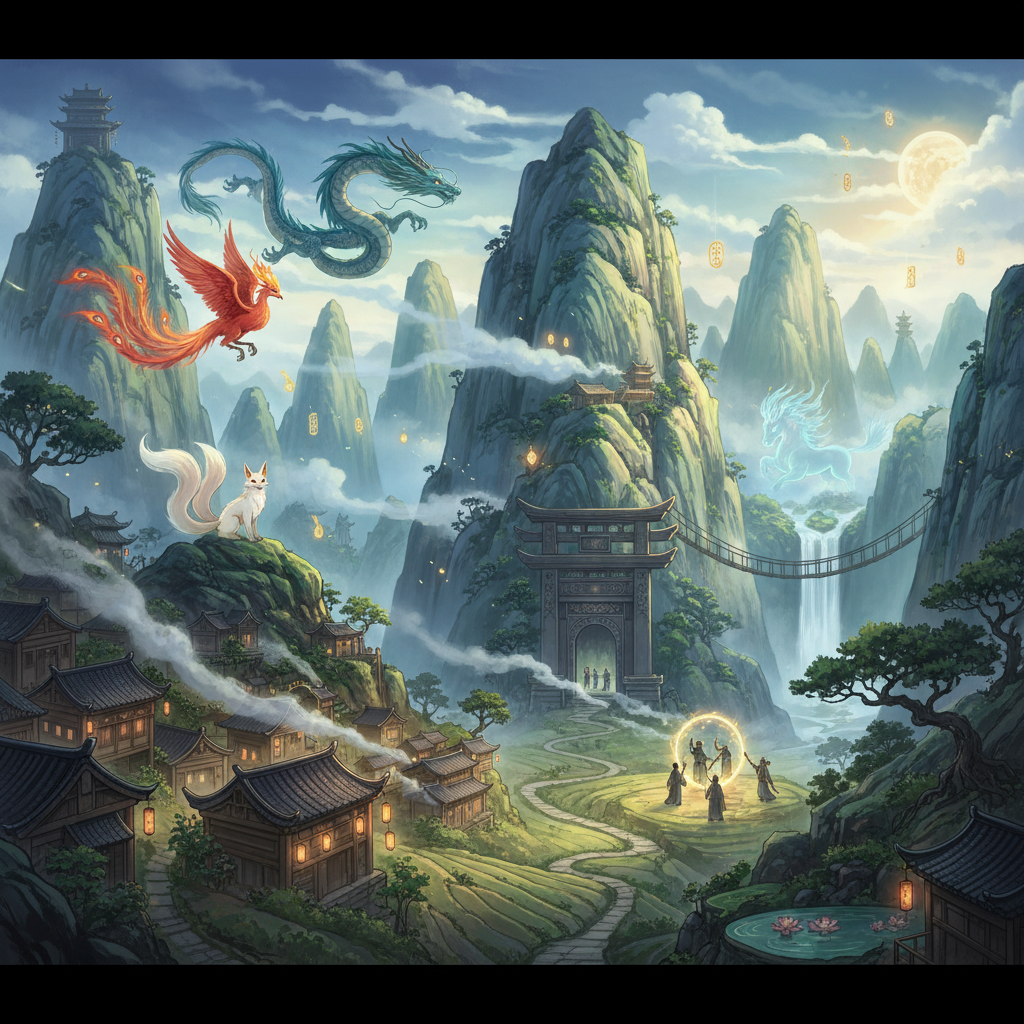
Introduction to Chinese Mountain Legends
China’s mountainous landscapes are not only breathtaking natural wonders but also rich backdrops for legends and folklore that have shaped cultural identity for centuries. These tales serve as repositories of ancient wisdom, connecting nature, spirituality, and humanity. Chinese mountain legends often blend historical events with mythic imagination, creating narratives that resonate with values such as harmony, perseverance, and respect for nature. In this article, we will delve into some of the most enchanting legends associated with China’s mountains and their significance in cultural traditions.
The Sacred Mountains and Their Legendary Guardians
China is home to the famed Five Great Mountains (Wuyue), each representing a cardinal direction and embodying powerful spiritual symbolism. These mountains—Tai (East), Heng (South), Hua (West), Song (Center), and Heng (North)—feature prominently in folklore as abodes of immortals, gods, and legendary heroes. For instance, Mount Tai in Shandong province is revered as the “Eastern Peak” and is thought to be the gateway to heaven. Its legends tell of deities who judge the souls of the dead, signifying its role as a spiritual axis. Pilgrimages to Mount Tai have been practiced for millennia, emphasizing the mountain’s role in rituals of renewal and protection.
Mythological figures like the Yellow Emperor (Huangdi), considered the ancestor of the Chinese civilization, are linked to these mountains, enhancing their historical and legendary stature. The reverence for sacred mountains reflects the deep Chinese cultural belief in the unity of heaven, earth, and humanity—a central theme in many traditional philosophies.
The Legend of The Immortal Peach Garden on Mount Kunlun
Mount Kunlun, often described as the “Axis Mundi” or the cosmic mountain in Chinese myth, is famed for legends involving immortality and divine entities. One of the most captivating tales is that of the Queen Mother of the West (Xiwangmu) and her mystical peach garden. According to folklore, the peaches grown in this celestial orchard ripen once every 3,000 years and grant immortality to those who eat them.
The peach, as a symbol of longevity and renewal, is pivotal in this myth and appears extensively in Chinese art and celebrations. The Queen Mother’s garden is guarded by supernatural creatures and remote from the mortal world, symbolizing the quest for eternal life and spiritual purity. This legend has influenced Taoist practices and Chinese notions of immortality, fusing myth with cultural ideals of health, longevity, and cosmic order.
Tales of Fierce Heroes: The Legend of Mount Hua’s Sword Peak
Mount Hua, known for its steep cliffs and perilous trails, is the setting for numerous martial legends and heroic sagas. One popular story features Chen Xiang, a young hero who scales the treacherous mountain to retrieve a magical sword embedded in a rock, overcoming divine obstacles to save his family. This tale symbolizes filial piety, bravery, and the triumph of human will against adversity.
The “Sword Peak” itself is a geological formation linked to this legend, attracting adventurers and pilgrims alike. Beyond its thrilling narrative, the legend reflects Confucian values and the integration of martial virtues into Chinese popular culture. It also illustrates how geography and folklore intertwine, with natural landmarks gaining spiritual and moral significance through storytelling.
Cultural Traditions Rooted in Mountain Worship
The tradition of mountain worship in China dates back thousands of years and remains a vibrant part of cultural practice today. Seasonal festivals, climbing rituals, and offerings to mountain deities underscore the continuing reverence for these sites. For example, during the Tài Shān pilgrimage season, participants perform acts of devotion to seek blessings for health, prosperity, and harmony.
Mountain worship intersects with Daoist and Buddhist customs, as many peaks host temples and monasteries that have existed for centuries. These spiritual centers become focal points for community gatherings and cultural exchange, preserving ancient rituals and promoting environmental stewardship. Thus, mountain legends are not only stories but also living traditions that sustain collective identity across generations.
Conclusion: The Enduring Legacy of Chinese Mountain Legends
Chinese mountain legends offer more than just enchanting stories; they encapsulate profound cultural philosophies, historical continuities, and the Chinese people’s intimate relationship with nature. Through sacred peaks, mythical gardens, heroic tales, and ritual practices, these legends continue to inspire awe, respect, and a sense of belonging. By exploring these mountain myths, we gain vital insights into China’s rich cultural tapestry and the enduring dialogue between humanity and the natural world.
For cultural enthusiasts and scholars alike, the mountains stand not just as physical landmarks but as symbolic realms where history, spirituality, and imagination converge—a testament to the timeless power of Chinese folklore.