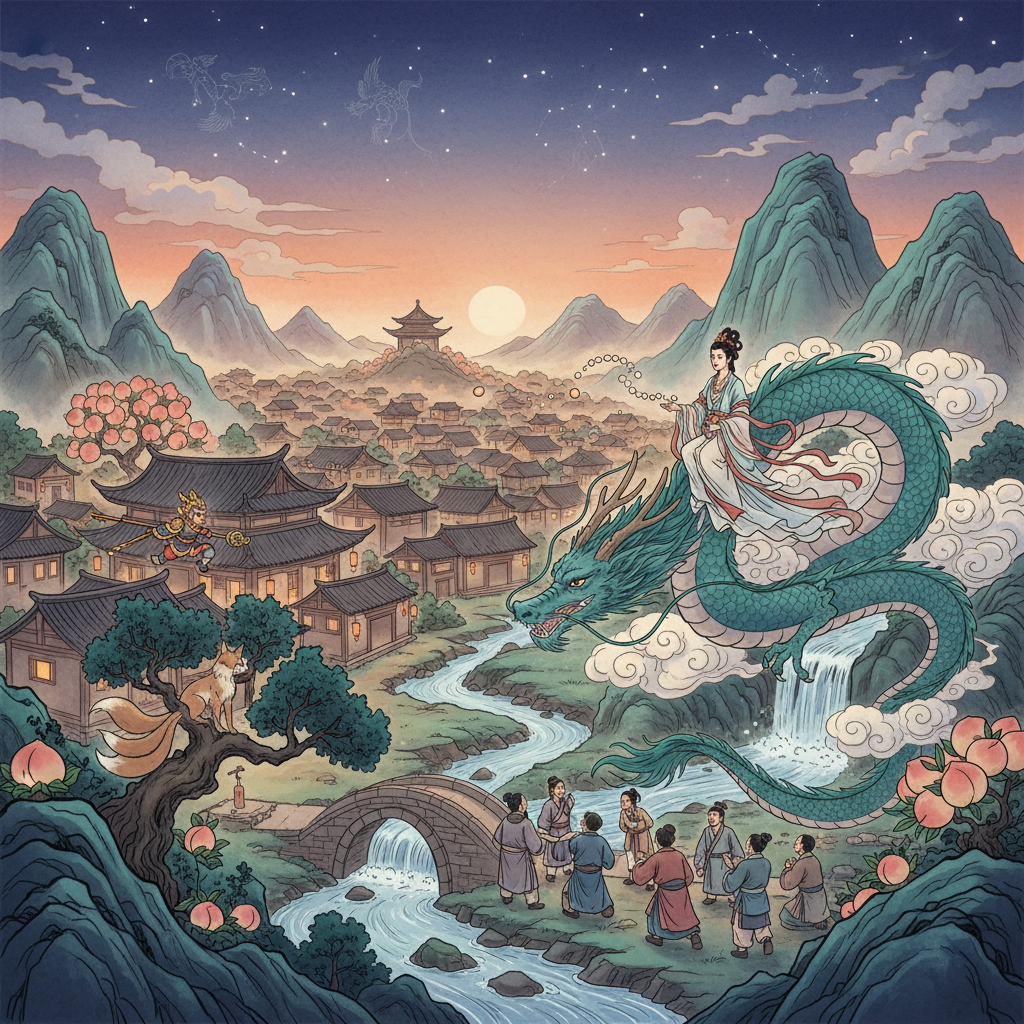
The Historical Context of Chinese Folklore
Chinese folklore is a compelling narrative thread woven through millennia, echoing the values and beliefs of various dynasties and social classes. This folklore has been shaped by historical events, philosophies, and cultural exchanges that have occurred over the centuries. The roots of many folk tales can often be traced back to ancient texts, dynastic chronicles, and oral traditions, reflecting the agricultural societies of early China, their struggles, triumphs, and ever-present aspirations for harmony and prosperity.
During the Song Dynasty (960-1279 CE), for instance, the proliferation of literature and art paved the way for folk tales to flourish, intertwining reality with mythology. This period witnessed the publishing of collections such as "The Stories of the Three Kingdoms," which blend historical figures with legendary elements. The rich terrain of Chinese folklore often serves to both entertain and deliver moral lessons, echoing the ancient aphorism that stories are the vessels of cultural values.
Significant Legends and Moral Tales
Among the vast treasury of Chinese folklore, several legends stand out for their moral teachings and cultural significance. One such tale is that of "The Butterfly Lovers" (Butterfly Lovers), a classic love story akin to "Romeo and Juliet." Set during the Eastern Jin Dynasty, it depicts the tragic romance between Zhu Yingtai and Liang Shanbo, culminating in a moralistic message about love, sacrifice, and societal constraints.
Another important tale, "The Legend of White Snake," features a love story that transcends the boundaries between humans and immortals. This narrative serves as an exploration of love's transformative power and the values of loyalty and devotion. Both stories underscore the importance of familial obligations and societal expectations, resonating deeply with the collective morality upheld in traditional Chinese society.
Cultural Traditions: Celebrating Folklore Through Festivals
Festivals in China offer a vibrant platform for enlivening folklore and legends. The Lantern Festival, celebrated on the fifteenth day of the first lunar month, encapsulates joyful reunions and familial love. It is also a day marked by the storytelling of ancient tales and participation in lantern displays, embodying the spirit of hope and renewal.
Another significant occasion is the Qixi Festival, also recognized as Chinese Valentine's Day. Rooted in the story of the Cowherd and the Weaver Girl—two star-crossed lovers separated by the Milky Way—it symbolizes love, longing, and reconciliation. Throughout these celebrations, communities engage with folklore, reliving tales that emphasize loyalty, virtue, and cultural identity.
Fairy Tales: The Enchantment of the Natural and Supernatural
Chinese fairy tales often showcase the interactions between humans and supernatural beings, with animals frequently taking on sentient roles. For instance, the tale of "The Clever Rabbit" features a mischievous rabbit who outsmarts a ferocious tiger, exemplifying cleverness over brute strength. Such stories reflect key cultural values, encouraging intelligence, resourcefulness, and the significance of nature.
Fairy tales also provide insight into traditional beliefs surrounding spirits and ancestors. Many folktales acknowledge the influence of the spirit world, where immortals and guardians play pivotal roles in human affairs. This element not only demonstrates the reverence for ancestors prevalent in Chinese culture but also embodies a worldview in which the earthly and celestial realms coexist.
The Significance of Moral Lessons in Folklore
At the heart of Chinese myths and legends lies a trove of moral teachings. These stories often center on essential virtues such as filial piety, honesty, and loyalty, aligning closely with traditional Confucian values. Through engaging narratives, they educate generations about acceptable behaviors, serving as a source of wisdom for both children and adults alike.
In contrast to Western fairy tales that may have happier endings, many Chinese stories contain bittersweet resolutions, often reflective of retribution or karmic justice. This notion of fate, coupled with the idea that one’s deeds shape their destiny, forms a crucial element of the moral teachings conveyed through these folk narratives.
Conclusion: The Enduring Legacy of Chinese Folklore
Chinese folklore, with its substantial legends, moral tales, and enchanting fairy tales, embodies the essence of cultural heritage. These stories form the backbone of societal values, merge with tradition, and offer guidance for future generations. As global interest in cultural storytelling rises, the rich tapestry of Chinese folklore continues to inspire new adaptations in literature, film, and art, securing its relevance and resonance for years to come.
In an increasingly interconnected world, understanding the nuances of Chinese folklore enhances our appreciation of its rich cultural landscape while revealing universal themes that transcend borders. From heartfelt tales of love and sacrifice to whimsical narratives of clever creatures, Chinese folklore invites a journey into the depths of human emotion and societal values.