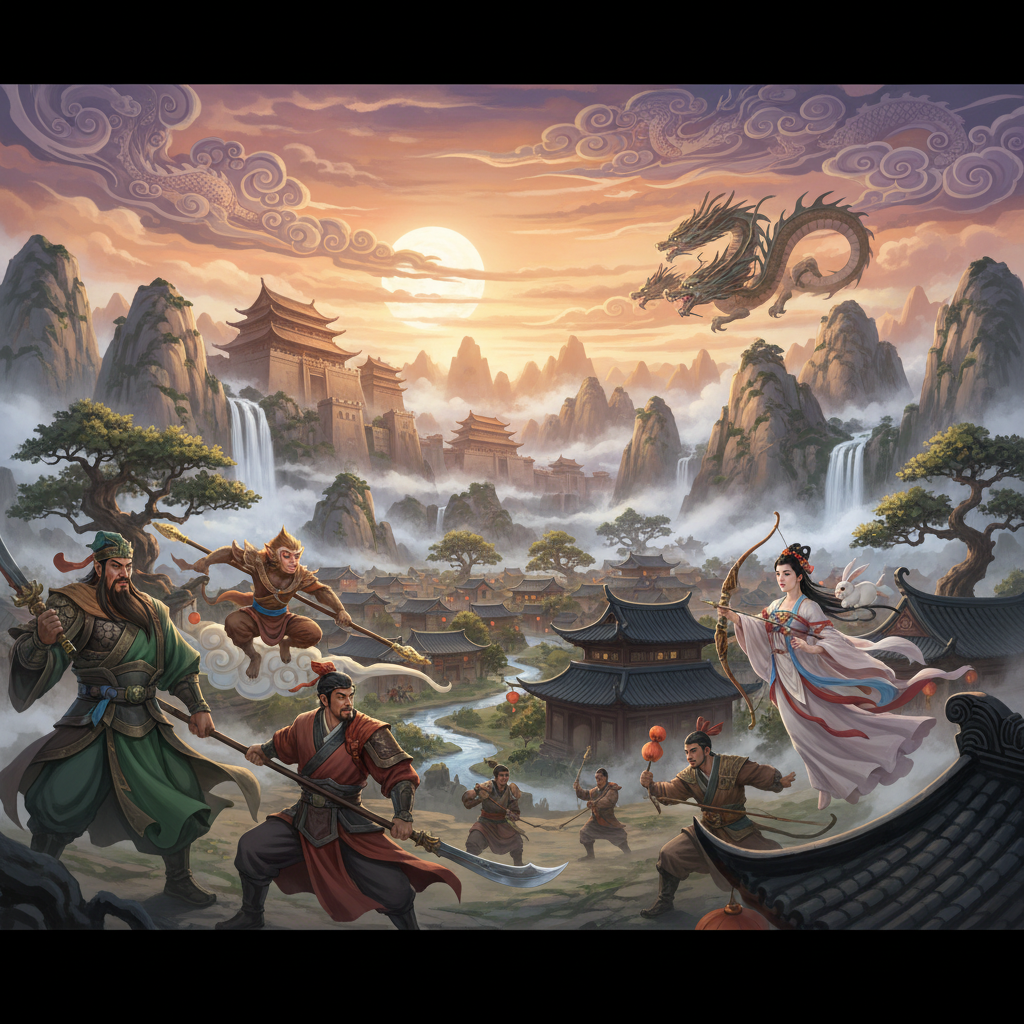
The Essence of Heroism in Chinese Folklore
Chinese folklore is rich with stories of extraordinary individuals whose courage, wisdom, and virtues have transcended generations. These hero tales are more than mere entertainment; they function as moral compasses and cultural anchors, illustrating ideals celebrated in Chinese society. From ancient myths to classical literature, heroic figures personify traits like loyalty, righteousness, and filial piety—foundational values that underpin family and social harmony.
Hero tales in Chinese culture originate from oral traditions dating back millennia, evolving through dynastic eras with layers of political, spiritual, and philosophical influences. These narratives often blend historical facts with mythic embellishments, highlighting the complex relationship between legend and historical consciousness in China.
Historical Roots of Chinese Hero Tales
Many celebrated heroes in Chinese folklore trace their origins to key historical periods such as the Warring States (475–221 BCE), Han Dynasty (206 BCE–220 CE), and the Three Kingdoms era (220–280 CE). For example, figures like Guan Yu, revered for martial prowess and loyalty during the Three Kingdoms period, have become cultural icons symbolizing fidelity and righteousness.
Historically, these tales served as pedagogical tools within Confucian society, used to teach virtues through exemplary lives. Imperial examinations sometimes referenced such stories, reinforcing lessons in governance and ethics. Beyond Confucianism, Daoist and Buddhist elements often weave into hero narratives, providing spiritual dimensions to their quests and challenges.
Iconic Heroic Figures and Their Cultural Impact
Guan Yu: The God of War and Symbol of Loyalty
Guan Yu stands out as a paragon of loyalty and integrity. Initially a general under warlord Liu Bei, his narrative embodies devotion to brotherhood and justice. Over time, Guan Yu was deified and worshiped across China, influencing martial arts, business ethics, and folk religion.
The Monkey King: Trickster and Protector
Sun Wukong, the Monkey King from Journey to the West, is a unique hero whose cleverness and rebellious spirit challenge the status quo. His journey from chaos to enlightenment encapsulates Daoist themes of transformation, highlighting the importance of balance between freedom and discipline.
Hua Mulan: Courage and Filial Devotion
Mulan’s legendary tale of disguising herself as a man to serve in the army reflects deep respect for family and sacrifice. Though the earliest versions of her story are poetic ballads, Mulan’s legend has inspired countless adaptations symbolizing female empowerment and patriotism.
Cultural Traditions and Rituals Centered on Heroes
Hero tales in China are not confined to stories—they live on in festivals, rituals, and local customs. For instance, Guan Yu’s birthday is celebrated annually with temple fairs and martial demonstrations, emphasizing communal values and protector spirits.
Moreover, operatic and theatrical forms such as Peking Opera vividly bring these heroes to life through elaborate costumes, music, and stylized performance. These cultural expressions serve as living archives preserving hero narratives for contemporary audiences.
The Enduring Relevance of Hero Tales Today
In modern China, these hero stories continue to resonate amid rapid societal transformation. They provide cultural continuity and a sense of identity, often invoked in education, media, and popular culture to inspire resilience and honor traditional virtues.
Additionally, global interest in Chinese folklore has introduced these heroes to wider audiences, bridging East and West through literature, film, and art. As national symbols and storytelling motifs, they contribute to a global appreciation of China’s rich narrative heritage.
Conclusion: Hero Tales as Pillars of Chinese Cultural Identity
Chinese hero tales are much more than ancient stories—they are vibrant cultural treasures encapsulating Confucian ideals, spiritual insights, and historical memories. By chronicling the challenges and triumphs of heroic figures, these narratives not only entertain but teach, unify, and inspire. Understanding these tales opens a window into China’s soul, reflecting the enduring human quest for virtue, courage, and meaning.