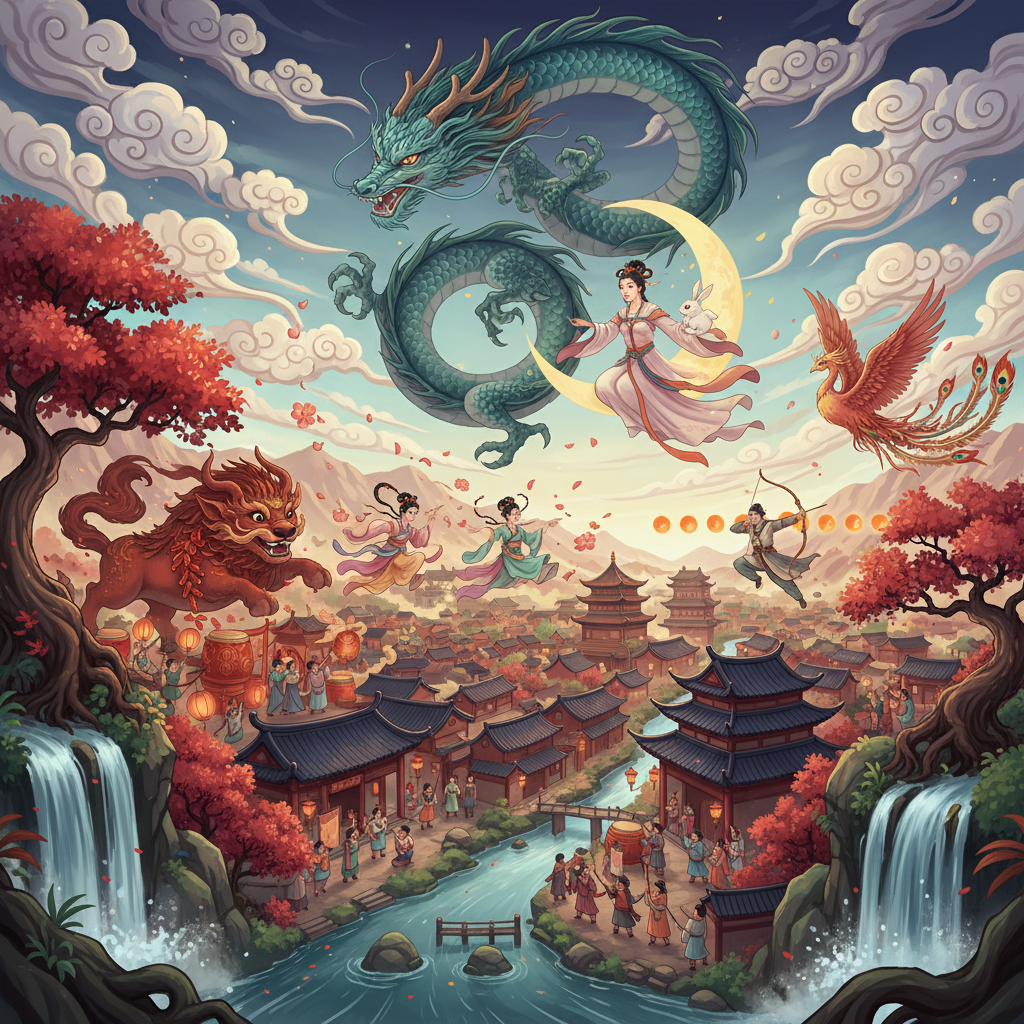
The Roots of Chinese Folklore: An Introduction
Chinese folklore is a vibrant tapestry woven with legends, myths, and fairy tales that reflect the values, beliefs, and historical experiences of its people. Unlike straightforward narratives, these tales often serve multifaceted purposes—entertaining, educating, and preserving cultural heritage. As we delve into the origins and meanings behind notable festivals in China, we uncover the intricate connections between folklore and the cyclical nature of life.
Legends Come Alive: The Origins of Chinese Festivals
Many Chinese festivals are anchored in ancient legends that have withstood the test of time. One such example is the Qingming Festival, also known as Tomb-Sweeping Day, celebrated in early April. The festival primarily honors ancestors, allowing families to pay their respects and maintain the bond of filial piety, a core tenet of Chinese culture rooted in Confucian ethos.
The origins of the Qingming Festival can be traced back over 2,500 years, specifically to the Tang Dynasty. The famous legend associated with this festival involves Cold Food Day, where people would only consume cold food on the day before Qingming in remembrance of a loyal son named Jiezhi, who sacrificed his life to protect his father. Celebrating this festival is not merely an obligation but a celebration of family heritage, ensuring the continuity of traditions across generations.
Enchanting Tales: The Legend of the Dragon Boat Festival
Another significant festival deeply rooted in folklore is the Dragon Boat Festival, celebrated on the fifth day of the fifth lunar month. This festival commemorates the death of the poet, diplomat, and statesman Qu Yuan, who lived during the Warring States period. Upon learning that his country was to be defeated, Qu Yuan jumped into the Miluo River, choosing death over conquest.
Local villagers, horrified by his demise, raced boats into the river to retrieve his body, providing the basis for dragon boat racing. Additionally, they threw zongzi—sticky rice dumplings wrapped in bamboo leaves—into the water to feed the fish, ensuring they would not consume Qu Yuan's body. Today, the Dragon Boat Festival serves as a vivid reminder of patriotism and cultural identity, with dragon boat races symbolizing teamwork and community spirit.
The Symbolism of the Mid-Autumn Festival: Legends and Significance
Another irreplaceable gem in China's festival calendar is the Mid-Autumn Festival, celebrated on the 15th day of the 8th lunar month. This festival is deeply intertwined with romantic tales and celestial symbolism, illustrating the connection between the moon and familial bonds. The most famous legend revolves around Chang'e, the moon goddess.
According to the tale, Chang'e consumed an elixir of immortality and floated to the moon, leaving her beloved husband, Hou Yi, behind. Each year, families gather beneath the full moon to share mooncakes, symbolizing reunion and harmony. The festival highlights not only the importance of the moon as a symbol of unity but also emphasizes the deep-rooted cultural values of togetherness, gratitude, and reverence for nature.
The Role of Folklore in Chinese New Year Celebrations
Chinese New Year is perhaps the most celebrated festival in China, steeped in rich folklore and legends. The origins of this festival can be traced to ancient agricultural traditions, but one particular legend often stands out: the story of Nian, the mythical beast. According to lore, Nian would terrorize villages, devouring livestock and crops.
The villagers learned that Nian was afraid of loud noises, bright lights, and the color red. As a result, they set off fireworks, hung red lanterns, and decorated their homes in red—traditions that endure to this day. Chinese New Year serves as a time of renewal, family gatherings, and the welcome of spring, encapsulating the essence of hope, prosperity, and resilience.
Embracing the Elusive Nature of Chinese Folklore
Chinese folklore continues to thrive, eliciting fascination and curiosity while adapting to contemporary times. The colorful tapestry of myths, legends, and fairy tales provides not only entertainment but also powerful lessons wrapped in cultural insights. Through festivals that celebrate these narratives, the people of China sustain their unique cultural identity, ensuring that their rich heritage endures through generations.
In conclusion, understanding the origins of Chinese folklore and its intertwining with festival celebrations invites a deeper appreciation for the culture’s complexity and richness. Each tale and tradition carries historical weight, illustrating values and teachings that have shaped Chinese society over millennia. The legends may vary in detail, but their shared themes of love, sacrifice, and the human connection bind them together, creating a mesmerizing narrative woven into the very essence of Chinese culture.