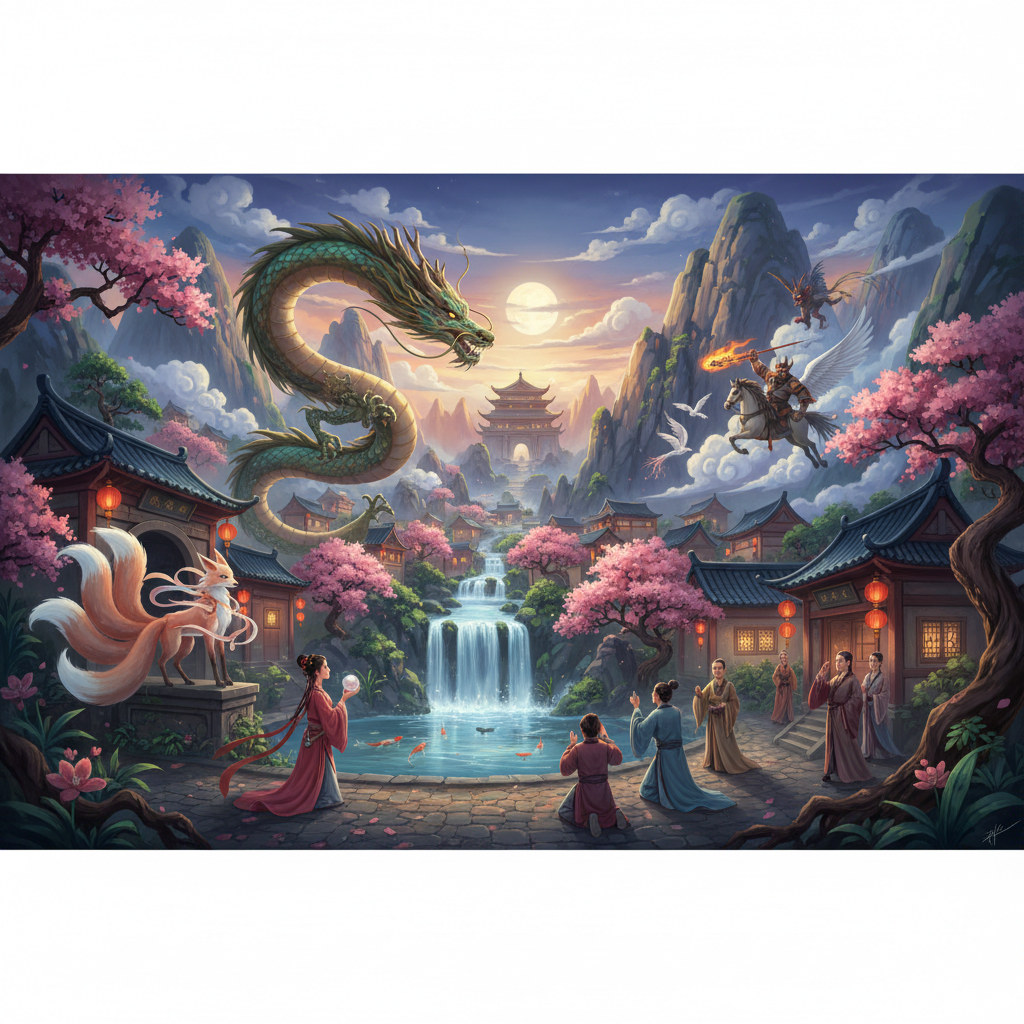
The Intricate Tapestry of Chinese Folklore
Chinese folklore is a complex interweaving of myths, legends, and cultural traditions that has been passed down through generations. These stories often serve not only as entertainment but also as moral lessons, instructional tales that reflect the values and beliefs of Chinese society. The historical context of these narratives is rich, with roots reaching back thousands of years, illustrating how folklore plays a central role in understanding Chinese identity and culture.
Historical Context of Chinese Legends
The beginnings of Chinese folklore can be traced back to the age of the Xia dynasty (c. 2070-1600 BCE) and were notably influenced by the changes during the Zhou dynasty (c. 1046-256 BCE). During these eras, storytelling became a way to preserve history and impart wisdom. Many of the early myths revolved around deities, influential figures, and nature, often intertwining human experiences with celestial events. This historical backdrop not only helped shape the narratives but also provided a platform for moral and philosophical teachings that would resonate throughout Chinese history.
Notable Legends and Their Significance
The Legend of the White Snake
One of the most beloved legends in Chinese folklore is the tale of the White Snake (Bai She Zhuan), which tells the story of a love affair between a human and a snake spirit. The story showcases themes of love, sacrifice, and the struggle between good and evil. It offers a commentary on societal norms and the acceptance of different forms and faces of love. The legend has inspired numerous adaptations in operas, films, and novels, marking its significant cultural impact.
The Cowherd and the Weaver Girl
This romantic legend narrates the love story between Niulang (the Cowherd) and Zhinu (the Weaver Girl), who are separated by the Milky Way and allowed to reunite only once a year on the Qixi Festival, also known as Chinese Valentine’s Day. Their love story symbolizes the tenacity of love against obstacles and has become a focal point of many cultural celebrations. Their plight resonates with many, creating a perpetual longing reflected in the fabric of Chinese artistic expression.
Fairy Tales and Fables: Lessons Through Stories
Chinese fairy tales and fables often embody practical wisdom and moral lessons. Characters such as the clever monkey or the wise old turtle frequently appear, imparting life lessons through their whimsical adventures. One popular tale, "The Farmer and the Snake," teaches the importance of trust and the consequences of naive benevolence. Such stories dominate the oral tradition, showcasing the scholarly emphasis on passing down life’s lessons to younger generations.
Cultural Traditions Wrapped in Folklore
Festivals Celebrating Folklore
Chinese folklore is inextricably linked to its rich array of cultural traditions, particularly during festive occasions. The Lantern Festival, celebrated on the 15th day of the first lunar month, emerges from ancient legends and marks the end of the Chinese New Year celebrations. The lanterns symbolize the release of burdens from the past, lighting the way for a prosperous and joyful future.
Similarly, the Qingming Festival or Tomb Sweeping Day reflects respect for ancestors, rooted in both folklore and deep-seated Confucian values. These celebrations are not mere festivities, but an embodiment of a culture shaped by centuries of beliefs and narratives.
Divining Wisdom Through Folklore
Another crucial aspect of Chinese folklore lies in its role in divination and fortune-telling. Stories are often used to explain natural phenomena or provide guidance on ethical dilemmas, utilizing characters from popular folklore. Important texts like the "I Ching" are steeped in allegorical tales that teach moral values while providing a framework for decision-making.
Conclusion: The Lasting Influence of Chinese Folklore
Chinese folklore is not simply an archive of ancient stories but a living tradition that continues to influence and shape modern Chinese culture. The legends, fairy tales, and cultural practices embed deep within the national psyche, echoing the values of love, wisdom, resilience, and respect for tradition. As we delve into these enchanting narratives, we uncover more than just tales; we engage with a vibrant cultural legacy that is integral to understanding the essence of China today.
Chinese folklore remains a testament to the power of storytelling, illustrating the timeless struggle between the human spirit and the complex world in which it exists. The tradition fosters community, reflects deep-seated values, and asserts cultural identity, ensuring the stories will continue to enchant and inspire future generations.