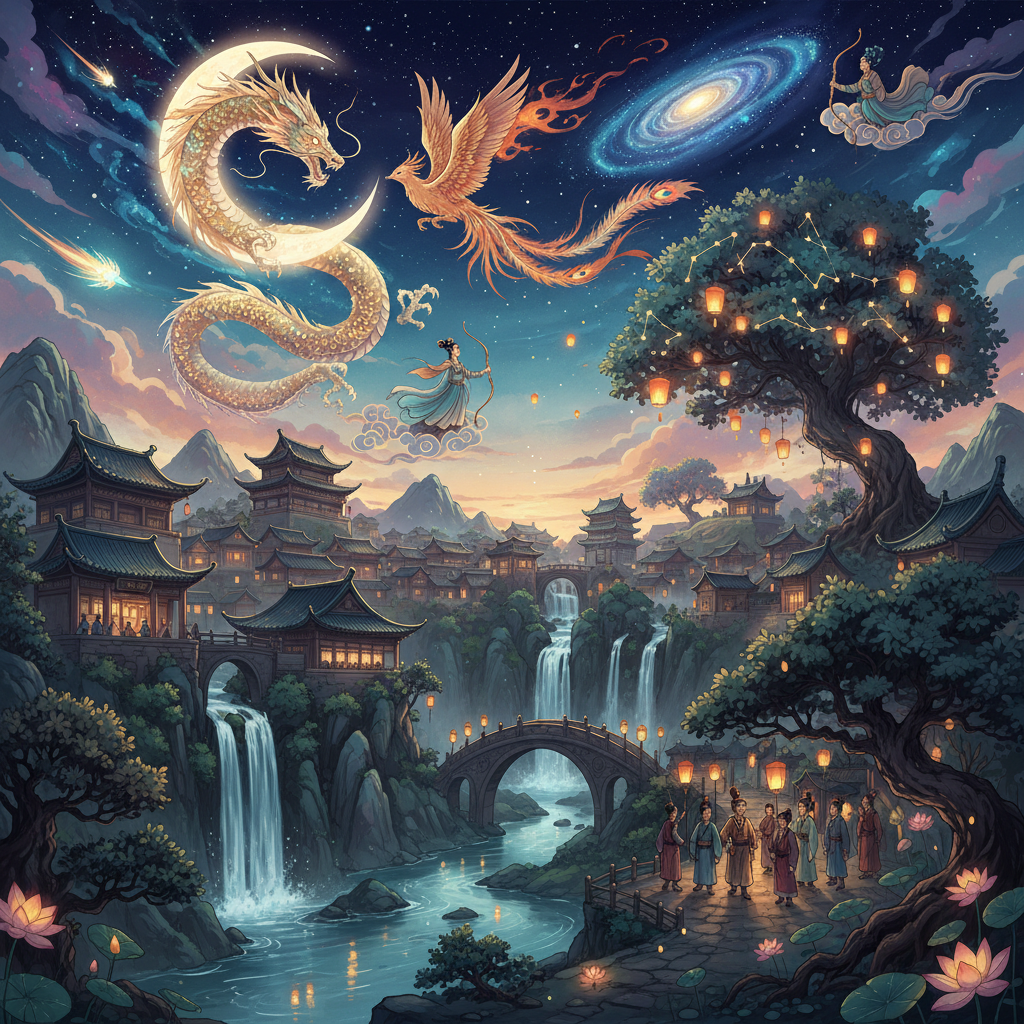
The Rich Tapestry of Chinese Folklore: An Overview
Chinese folklore is a captivating blend of myths, legends, and fairy tales that reveal the profound cultural values and historical context of the nation. These narratives often feature celestial beings, deities, and moral lessons that resonate through generations. As China's history spans thousands of years, its folklore reflects the changing landscapes of society, philosophy, and spirituality.
The celestial tales represent the pinnacle of Chinese folklore. They not only entertain but also serve as vessels for cultural identity, conveying lessons about duty, loyalty, and the natural world. The importance of harmony, balance, and respect for the cosmos is explored through these narratives, bridging the earthly realm with the celestial.
The Legend of the Moon Goddess: Chang'e
One of the most famous celestial tales is that of Chang'e, the Moon Goddess. According to legend, she was once a beautiful woman married to the heroic archer Hou Yi. After Hou Yi obtained an elixir of immortality, he granted it to Chang'e for safekeeping. However, facing temptation and conflict, she ultimately consumed the potion, leading her to ascend to the Moon.
Chang'e's story encapsulates themes of sacrifice, love, and the bittersweet nature of immortality. The Mid-Autumn Festival, which celebrates her legacy, resonates with those who gather to gaze at the moon and enjoy mooncakes, symbolizing unity and prosperity.
The Tale of the Cowherd and the Weaver Girl: A Cosmic Love Story
Another captivating celestial tale is that of the Cowherd and the Weaver Girl, a poignant narrative of love separated by the Milky Way. The legend portrays a celestial weaver named Zhinü (the Weaver Girl) who falls in love with Niulang (the Cowherd). However, their love angers the Queen Mother of the West, who banishes Zhinü to the heavens.
Once a year, on the seventh day of the seventh lunar month, a bridge of magpies allows the couple to reunite, giving birth to the Qixi Festival. This tale highlights the significance of love and longing, revealing how Chinese folklore intertwines with celestial phenomena and agricultural seasons.
The Eight Immortals: Guardians of Chinese Culture
The Eight Immortals are a revered group of legendary figures, each embodying distinct virtues and strengths. Known as "Ba Xian," these deities represent various aspects of life, including wealth, health, and wisdom. Their stories are full of adventure, humor, and moral lessons, making them popular in Chinese literature and arts.
These figures symbolize the importance of balance in life, where each immortal's unique traits contribute to harmony when combined. The Eight Immortals serve as cultural icons, reminding people of the value of community, friendship, and support in overcoming life's trials.
Cultural Traditions Rooted in Celestial Narratives
Chinese folklore's celestial tales greatly influence rituals, festivals, and daily practices. Celebrations such as the Lantern Festival and Dragon Boat Festival are steeped in mythological significance. The colorful lanterns of the Lantern Festival symbolize the lighting of the way for departed souls and the welcoming of new beginnings.
The integration of folklore into cultural practices fosters a sense of continuity and identity within Chinese society. While globalization continues to influence contemporary life, these traditional stories carry a timeless appeal that connects the past with the present.
The Enduring Impact of Celestial Folklore
The enduring allure of Chinese celestial tales lies in their ability to captivate the imagination while imparting wisdom and moral lessons. They invite us to ponder our relationships with one another, our responsibilities towards nature, and our place within the cosmos. As these stories are passed down through generations, they not only enrich individual lives but also preserve the collective spirit of a culture.
In an era where modern distractions often overshadow traditional narratives, the revival of interest in these enchanting legends highlights their cultural significance. Whether through festivals, literature, or art, Chinese celestial folklore continues to resonate, reminding us of the magic and complexity woven into the fabric of human experience.
As we delve deeper into the celestial realms of these stories, we unearth the rich heritage they embody—transforming ancient wisdom into a present-day tapestry that binds generations across time and space.